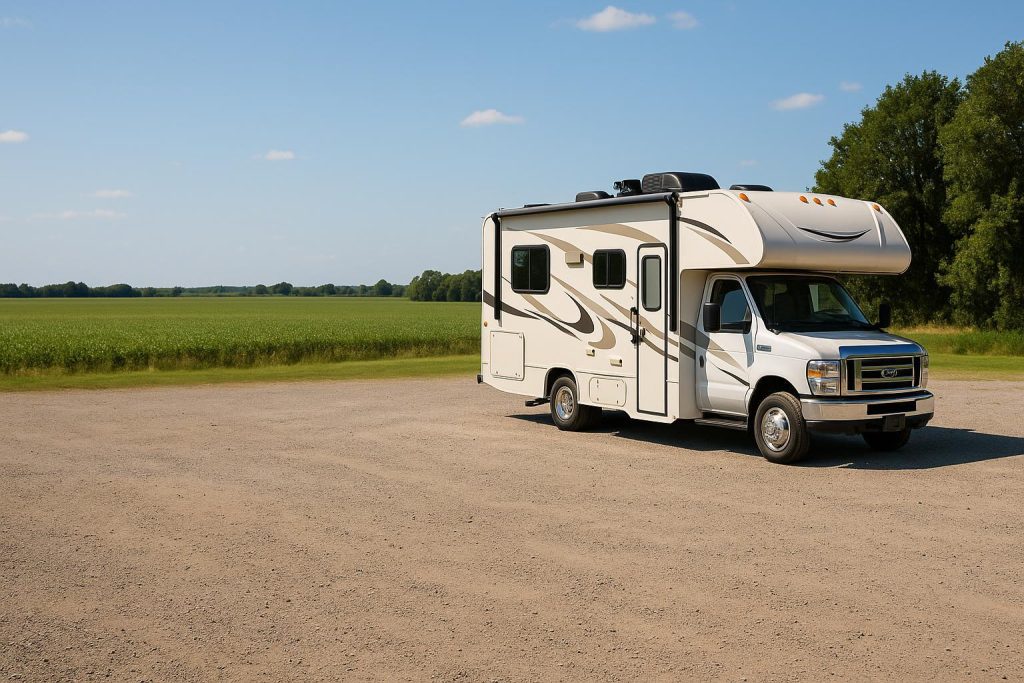
Understanding the Basics of RV Storage and Tax Deductions
Recreational vehicles (RVs) offer a sense of freedom and adventure. Whether used for weekend road trips, cross-country excursions, or simply as a cozy place to crash during the summer, owning an RV can bring immense enjoyment. However, figuring out how to store your vehicle and whether RV storage costs are tax deductible can quickly get confusing. In this guide, we'll explore the various tax deduction rules that may or may not apply to RV storage, show you when tax deductions could come into play, and provide general tips to help you keep your finances on track. Keep in mind that regulations may differ based on your location, and it's always a good idea to consult with a tax professional for personal advice.
What Makes RV Storage Tax Deductible?
Generally, storage fees for an RV used only for personal use are not tax deductible. But there are some circumstances when they might be. The key is whether your RV might be classified as a business asset or, in limited cases, recognized as a second home (though the second home deduction generally relates to mortgage interest, not storage fees). Below, we'll explore the two main paths to potentially deducting a portion of your RV storage expenses:
- Business Use of an RV
- Mortgage Interest Deduction on a Second Home RV
Each of these possibilities has its own unique requirements and documentation needs. Some owners might qualify for a partial deduction, while others may not be eligible at all. Let's discuss them in more detail.
Business Use of an RV
If you use your RV as a mobile office or as part of a business—say you rent it out, use it for a photography venture that involves traveling, or treat it as a place to conduct client meetings—there could be opportunities to claim some of the RV's expenses on your taxes. The Internal Revenue Service (IRS) in the United States, or the Canada Revenue Agency (CRA) in Canada, typically requires that the RV be used in an "ordinary and necessary" capacity for business. This means the business use should be:
- Regular and Consistent: An occasional road trip that mixes personal and business travel might not cut it unless carefully documented.
- Directly Related to Generating Income: The RV's involvement should help you earn revenue or maintain a viable business presence.
- Well-Documented with Records: For each trip or portion of the RV's use, maintain receipts, mileage logs, and a schedule illustrating how often the RV is used for personal versus commercial purposes.
When the RV truly functions as a profitable vehicle for business, your storage costs might be considered part of its overall business expenses. This could potentially include:
- Monthly Rental Fees: If you pay to store the RV in a dedicated facility.
- Maintenance and Repairs: Expenses directly related to the business use, such as routine upkeep that allows you to keep the RV in working order for business activities.
- Insurance: The portion of insurance costs that relate to business usage could, in theory, come into play.
However, remember that if the RV is only partly for business use, you may deduct only the relevant fraction of each expense. For instance, if your logs show that 50% of the RV's use is for business, you could potentially deduct half of the allowable costs (always confirm with a professional). Undocumented claims will not hold up in a tax audit, so records and consistency are imperative.
When Self-Employed or Small Business Owners Benefit
Many self-employed individuals, entrepreneurs, or small business owners rely on an RV to manage remote work or even store business supplies. This could apply to:
- Consultants or Creatives: Those who use an RV as a traveling art studio, a photography workspace, or a mobile consulting office.
- Rental Operators: People who rent out the RV on a peer-to-peer platform might include storage fees as a business expense. This only applies for the times the RV is actively listed or used for that revenue-generating purpose.
- Sales Professionals: If your livelihood involves traveling to trade shows or client sites and the RV is part of your self-employed work arrangement, you might explore partial deductions.
The main principle is that the expense must serve a legitimate business purpose. You should keep a careful log that differentiates personal use from commercial use. Even a few days of personal vacation might reduce the percentage of the expenses you can claim. The government usually requires you to prove that you're not simply trying to deduct a personal lifestyle choice.
RV as a Second Home: Mortgage Interest Deduction
Some RVs, especially those with cooking space, sleeping areas, and a bathroom, can qualify as a "second home" in the eyes of tax authorities. If the RV meets basic habitation requirements, you might be able to deduct mortgage interest, similar to a residential home or vacation property. In most cases, however, storage fees themselves are not deductible under second home rules. It's the interest on the RV loan that can qualify, and only if the RV is indeed recognized as a legitimate second home. Here are a few important points to remember:
- Your RV must have sleeping, cooking, and toilet facilities.
- The interest deduction is typically limited to a certain dollar amount of mortgage debt (rules can vary by tax year).
- You cannot generally claim space rental or storage fees under mortgage interest deductions. Only the interest portion of the RV's financing can qualify.
Though this route won't help you deduct the monthly rent for your RV storage space, it can reduce your annual tax bill if you financed your vehicle and have an active interest payment.
When RV Storage Is Not Tax Deductible
On the flip side, there are plenty of situations where RV storage fees simply don't qualify for any sort of tax deduction. If your RV is only used for personal travel, weekend outings, or as a spare bedroom in the driveway, the IRS or CRA views it as a personal expense. Here are some general scenarios where your fees would not be deductible:
- Purely Recreational Use: If you only take your RV on summer road trips or family vacations, you can't claim the associated storage costs as a business expense.
- Seasonal Storage with No Income Generation: Storing the RV for winter, with no intention of renting it out or utilizing it for business during that time.
- Personal Convenience: Storage fees paid at a facility near your home simply to circumvent driveway restrictions or city bylaws are considered personal. This is quite common—some neighborhoods do not allow large vehicles on the street year-round, which leads many people to find secure storage facilities. While the cost may be worthwhile for peace of mind, it is typically not tax deductible.
Additionally, you generally cannot deduct general living expenses related to the RV, such as insurance, maintenance, or property taxes on the RV (unless it's recognized as a second home for the latter point) when it's not used to produce income. Since these are largely personal costs, the government does not provide tax breaks for them.
Keeping Accurate Records and Documentation
If you believe your storage expenses for an RV might be deductible, ensure you keep meticulous records. Detailed documentation is the backbone of any valid tax deduction. Consider the following best practices:
- Maintain Receipts and Invoices: Save all monthly bills, spare parts receipts, and routine maintenance invoices. If you claim a portion of your storage fees, you will need solid proof that you paid them.
- Track Travel Logs: If the RV doubles as a personal and business vehicle, carefully log each trip, the purpose of the trip, the mileage, and any business activities conducted.
- Separate Bank Accounts: If feasible, keep a separate account or credit card for business-related transactions on your RV. This makes it easier to prove the validity of deductions.
- Consult a Professional: Tax rules vary by location, and the guidelines can be intricate. An accountant or tax advisor can help you accurately identify deductible expenses and ensure you remain compliant.
Important Disclaimers
Your personal situation plays a huge role in whether RV storage costs are tax deductible. Factors like how often you travel, whether you rent out the RV, and the proportion of business use all affect what you can claim. Also, rules can differ significantly between the United States and Canada (and within different provinces or states). That's why any article you read online—including this one—should be used exclusively for general guidance. A certified tax professional is your best resource for customized advice.
Storing Your RV During the Off-Season
In many parts of North America, RV owners face harsh winters that can cause complications for vehicles left outdoors. Using a secure, outdoor storage facility with wide lanes and large gravel stalls can be a practical fix. For example, you might choose to store your vehicle in an area with:
- Room to Park: Adequate room to maneuver even the largest motorhomes or travel trailers.
- Secure Access: A gated, fenced facility to minimize risks of theft or vandalism.
- Flexible Rental Terms: Options for long-term or seasonal storage that match your travel schedule.
If you are purely keeping the RV safe between trips, these costs usually remain personal expenses. Nevertheless, if you plan to incorporate business activity into your travels, a portion of those storage costs might become relevant for deductions.
Examples of Common Scenarios
- The Mobile Freelancer: Imagine you're a freelance graphic designer who splits the year between a stationary home and road travel for work. Half of your time is spent visiting client locations around the province using the RV. The vehicle is stored in a paid facility when not in use. In such a case, you might be able to deduct a portion of those storage fees, proportionate to the documented business usage.
- The Seasonal Snowbird: You love to escape harsh winters, driving your RV south for a few months each year. When at home, you store your RV in a local facility because your neighborhood restricts oversized vehicles on the street. You have no business use for your RV. In this scenario, the storage fees are generally classified as personal expenses and not deductible.
- The Small Business Owner: You run a small event-planning service and sometimes use your RV as a marketing tool at trade shows. You store extra supplies and inventory in the RV. Because these uses directly generate income, some of the RV's operational costs, including storage, could be eligible for partial deductions. But you must maintain good paperwork to prove your case.
Potential Additional Fees
When storing your RV, consider that you may incur costs beyond the monthly rent, such as:
- Security Deposits: Some facilities ask for an upfront deposit. If you're claiming business usage, you may include the relevant fraction of that deposit in your expenses if it is non-refundable and strictly related to business activities.
- Maintenance and Upgrades: Routine servicing or winterizing the RV could be partly deductible if the vehicle is used for business. Keep your receipts organized to show exactly how much was spent and for what purpose.
- Insurance Premiums: If you carry additional insurance to cover the RV while it's in storage and a portion of the vehicle's use is for business, talk with a tax advisor about whether you can write off part of your premium.
Where to Store Your RV
When storing an RV, people often look for convenient locations, secure fencing, and a decent layout so they can maneuver large vehicles without difficulty. If you're in the Alberta region, for instance, you can find RV storage options that offer 12×40 ft gravel stalls, pull-through availability, and flat-rate pricing. This hassle-free approach is ideal for folks who want to simply drop off their RV and know it's safe until the next trip.
Facilities that are just outside the city can help you avoid tighter urban areas or congested neighborhoods that impose strict bylaws on parking. Look for a site that allows easy in-and-out access from major roads, so you don't waste too much time on pickup day. While the cost of that storage might help you simplify your daily life, it does not necessarily translate into a tax deduction unless you meet one of the very specific business-related or second home criteria discussed above.
FAQs to Clarify the Tax-Deduction Puzzle
Q: Can I deduct all of my RV's expenses if I use it for a side gig?
A: Not automatically. Typically, you can only deduct the percentage of expenses that align with the duration or scope of business use. For instance, if you use your RV for business 30% of the time, you would generally deduct 30% of eligible costs, provided you can document those numbers.
Q: If my RV qualifies as a second home, can I write off storage fees?
A: Typically no. A second home classification can let you deduct mortgage interest, but not the monthly cost of rental space at a storage facility. That charge is considered personal unless you meet a business-use test.
Q: What if I store my RV in the off-season but also rent it out occasionally?
A: You might receive partial deductions for the portion of the year it is being prepared or maintained for rental use. Precise record-keeping and professional guidance are essential here.
Q: Do I need a special business license for RV rental to claim these costs?
A: Tax rules differ by region, but generally you do need to show that you're operating a venture intended to turn a profit. Consult with a tax specialist who understands local regulations.
Consult a Professional for Personalized Advice
Tax rules can be complicated, especially when it comes to partial business use and documenting how your RV is used throughout the year. If you're unsure whether you can claim RV storage expenses, it's best to get customized advice from a certified accountant or tax professional. They can analyze your situation, look at your records, and guide you toward making the most of legitimate deductions while staying on the right side of tax laws.
RVs offer an incredible way to experience travel, and storing them properly helps protect both your investment and your peace of mind. While most everyday storage fees may fall into the "personal expense" category, owners who legitimately use their RVs for business or rent them out might have opportunities for savings at tax time. Regardless of how you handle your RV, always keep thorough records, remain transparent about how you use the vehicle, and consult with an expert when in doubt.
In the end, RV storage is usually not tax deductible unless it directly ties into business operations or a recognized second home loan interest scenario. For the vast majority of pure recreational owners, storage costs are simply part of the budget for hassle-free travel. And if you're in central Alberta and looking for a reliable, hassle-free storage solution, you can explore services that fit your needs—whether you need RV storage, boat storage, or even a spot for a utility trailer. Doing so ensures you have room to park and peace of mind all in one place.
Remember: this article is for general informational use and does not substitute in any way for professional tax advice. Complexity arises in the details, so for maximum clarity on whether you qualify for any type of RV-related deduction, speak with an accountant who can guide you through the regulations in your area.