Choosing the Right RV Storage Facility: A Comprehensive Guide
Deciding where to store your recreational vehicle is a big deal, especially if you take pride in maintaining your RV for road trips, camping adventures, or even full-time travel. While some people have space at home, not everyone can accommodate a large motorhome or travel trailer in their driveway. Local bylaws often prohibit parking oversized vehicles on the street, and that leaves many RV owners looking for a secure, hassle-free storage solution. In this guide, we’ll walk you through everything you need to consider when choosing the right RV storage facility. We’ll cover location, security, stall sizes, pricing, access, and more, so you can evaluate your options confidently and find a facility that truly meets your needs.
1. Think About Location
The first factor most owners look at is location. How close do you want your RV storage to be from your home? Is the facility easy to reach from major highways, especially if you plan to head out for weekend getaways often? Many RV owners prefer a facility that’s either near their residence or along a route they frequently travel. This helps save time on pick-ups and drop-offs, especially when you’re excited to hit the road.
Remember that a short drive isn’t your only priority. Sometimes, it’s worth going a bit further if you can find a more secure, better-priced, or more spacious storage facility. For instance, if you live in or around St. Albert, you might appreciate a location that’s just outside the city limits, offering fewer restrictions, wider stalls, and easier maneuvering for your vehicle. In such cases, that extra 10- to 15-minute drive can be worth the peace of mind.
2. Inspect Security Measures
Security is crucial when you’re entrusting a facility with your RV. Ask about fencing, gates, and any kind of monitoring systems. Does the facility offer gated entry and exit? Are there surveillance cameras watching the property 24/7? If something does go wrong, does the storage operator have protocols in place to address it promptly?
Your goal is to feel confident that your RV is safe. A fenced and gated lot deters unwelcome visitors, and camera monitoring helps keep an eye on everything. Some facilities will also have on-site staff or designated personnel who do regular checks. These checks can identify early signs of vandalism or mishandling and help keep your vehicle secure. Peace of mind is priceless, so don’t be afraid to ask for details on how they safeguard your RV.
3. Look at Stall Sizes and Space
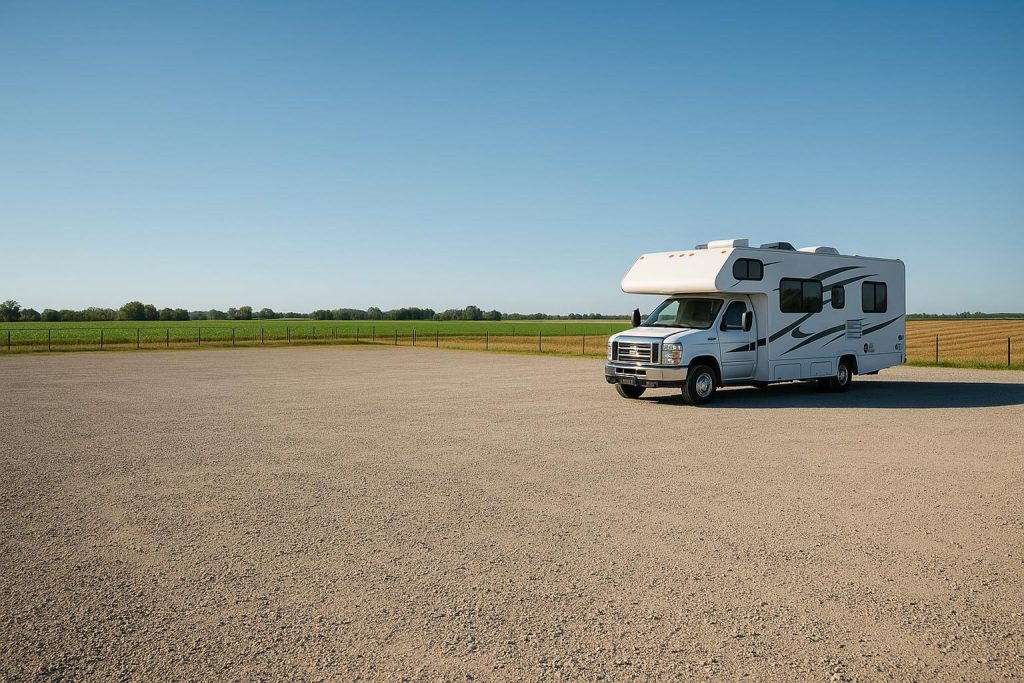
The size of the storage stall is not something you want to overlook. If you have a large Class A motorhome, a fifth wheel, or a bulky towable, you’ll need a space wide enough to accommodate it. Facilities that offer 12×40 ft gravel stalls give you a better chance of maneuvering your RV without scraping a fence or inching bumper to bumper with the next vehicle. Wide lanes and pull-through stall options (when available) can also make parking less stressful, especially if you’re new to towing.
Plenty of facilities claim they can store your RV, but ask questions about how easy it is to navigate the lot in real-world conditions. Check for obstacles, tight corners, and overall lane width. Remember that muddy or uneven ground can make it harder to park. Flat, gravel-based surfaces are often a good balance between cost-effectiveness and ease of parking. Gravel stalls provide adequate traction and help keep your vehicle stable.
4. Ask About Pricing and Terms
Everyone wants cost-effective storage, but more importantly, you need clarity. Some facilities draw you in with a low advertised rate, then add fees for access days, maintenance, or other items that were never mentioned up front. When touring potential storage locations, find out if they offer flat-rate pricing. Having one clear monthly or seasonal rate helps you avoid surprises down the line. Look for transparent contracts without complicated fine print.
Another point to look for is whether the facility offers short- or long-term storage options. Many RV owners store their vehicles seasonally, keeping their motorhome or travel trailer off the road for several months of the year. A facility that provides both 6-month and 12-month terms is often appealing. It allows flexibility, and you only pay for the length of time you actually need. Simple pricing and no hidden fees should be top of mind when you’re comparing facilities.
5. Consider Access to the Facility
Even the most secure, spacious storage facility won’t help if you can’t get to your RV when you want it. Some places have limited hours or require an appointment to retrieve your vehicle. That might not matter if your RV is going to sit unused for extended periods. But if you like making spontaneous trips or weekend getaways, you’ll want a facility that allows flexible access.
Ask about gate hours. Do they open early enough if you want to set out at sunrise? Are they open late enough to accommodate a late return? Find out whether there’s an after-hours policy in case you can’t make it during normal operation times. The goal is to ensure that schedule restrictions won’t stand in your way. RV travel should be fun—not stressful because you can’t pick up your vehicle when inspiration strikes.
6. Evaluate the Facility’s Overall Condition
Take a walk around the property if you can. Observe the cleanliness and overall organization. Do you notice standing water, mud, or debris that could make maneuvering difficult? Are the driving lanes clear of hazards like loose nails or sharp objects that might damage your RV’s tires?
It’s also useful to notice how many other RVs, boats, and trailers are stored there. If the facility has a reasonable occupancy level and looks well-maintained, that can be a good sign. You may even find other RV owners to chat with about their experiences. They can give you a helpful insider’s look at whether the facility meets their needs, from professional staff to reliability and the day-to-day ease of coming and going.
7. Don’t Forget Insurance Requirements
Most RV storage facilities require you to carry your own insurance, which is standard practice. Still, it’s a good idea to confirm. Make sure you’re clear on who covers what in the event of theft, weather damage, or vandalism. Some facilities might offer their own limited coverage or partner with an insurance provider, but this is less common.
Check with your auto or RV insurance company about their coverage policies if the vehicle is stored offsite. This step can save you headaches later. If anything, it’s another way to protect your investment and keep your mind at ease.
8. Think About Seasonal and Weather Considerations
If you store your RV in a place where brutal winters are common, the facility should handle snow and ice responsibly. You don’t want to be stuck in a snowdrift in mid-January when you need to access your RV, especially if you’re planning to head south for a winter vacation. Additionally, direct exposure to harsh sunlight in the summer can be an issue over long periods, so consider investing in an RV cover if you’re storing in an uncovered lot.
The climate in Alberta, for example, can vary greatly between seasons. It’s not just about the cold—it’s also hailstorms in the summer or fast temperature drops in the fall. A well-run storage lot will address these conditions by keeping the area plowed, salted, or otherwise maintained when cold weather hits. Asking how they manage snow removal and drainage can help you know what to expect year-round.
9. Additional Features to Look For
Depending on your needs, certain extra features might be game-changers. While some facilities only provide basic open-air stalls, others do more. For instance, you may come across off-grid garages for items that you need to lock up under a roof. These can be great if you’re storing valuable tools, a smaller vehicle, or extra equipment you use for work.
Pull-through stalls, when available, reduce the stress of reversing a long travel trailer or fifth wheel. If you have an RV with a boat trailer behind it or another tricky setup, a pull-through stall makes it much simpler. You might also look for a facility that can handle multiple types of vehicles, so you can keep your RV, cargo trailer, or boat in the same place, if needed.
10. Look for Simple and Transparent Communication
When you speak with staff or managers, do they answer your questions thoroughly? Are they open about policies, gate codes, and maintenance issues? The best storage facilities see you as a partner, not just a customer. Communication is key, and you want to ensure that if you ever have a question or a concern, you can pick up the phone or fire off an email and get a quick response.
Local, owner-operated facilities often pride themselves on good communication. They’re not big franchised chains. They know the local area, the weather, and the challenges of storing large vehicles in a place that experiences everything from heavy snowfall to scorching summer days. This local touch can mean they have real insight into how to keep your RV in good shape throughout the year.
11. Verify the Facility Is Well-Known for Reliability
RV owners typically share their experiences online. You can read reviews on social media forums or ask around at local RV clubs and meetups. If a facility consistently provides a reliable, hassle-free storage experience, chances are people will mention it. Of course, every place may have one or two less-than-perfect reviews, but the overall trend should be positive.
Reliability isn’t just about whether the gate opens when it should. It’s also about the consistency of service, clear pricing, and the staff’s willingness to address any issues. When you find a facility that folks keep recommending, you’ll know you’re on the right track.
12. Weigh the Benefits of a Flat-Rate, No-Frills Approach
Some owners want all the extras, like covering and climate control, but that’s not what everyone needs—or wants to pay for. If you’re looking for a simple, practical storage option, keep an eye out for a facility that focuses on the basics: secure space, straightforward pricing, and convenient access. You won’t pay for amenities you don’t need, and you can still enjoy peace of mind knowing your RV is in a safe spot.
Many RV owners especially appreciate knowing exactly what their monthly (or seasonal) bill will be. Flat-rate pricing is transparent, and if you only want to store your RV for certain months, many places offer seasonal or long-term storage contracts. Whether you’re storing the vehicle off-season or keeping it parked there year-round, it’s good to know your costs upfront.
13. Check for a Friendly, Local Touch
While it might not sit at the top of your checklist, the personality of the facility ownership can matter. If you value friendly, neighborly service—especially in an area like northern Alberta—it’s logical to consider how staff interactions feel. A local facility might be more in tune with the region’s climate and lifestyle, making them better prepared to help out during unexpected weather events or busy travel seasons.
Choosing a locally owned facility often means you’ll talk directly to folks who live in the same community and understand the importance of safe, hassle-free storage. Whether you’re storing your travel trailer for a winter getaway or keeping your RV near St. Albert between weekend camping trips, a friendly local owner helps bridge the gap between you and your storage needs.
14. Use Your Facility as a Launch Pad for Alberta Adventures
Some people underestimate how much easier trips become when you keep your RV in a place that’s near your favorite travel routes. Imagine a facility located just outside the city, with a quick hop onto major roads that lead you to scenic spots around Alberta. You can pick up your RV and go, without weaving through congested streets or spending half a day retrieving it from a hard-to-access location.
If you love exploring provincial parks, heading out for a fishing trip, or escaping to the mountains, storing your RV near major highways is a big perk. You save time and reduce stress, allowing you to focus on the joys of camping, hiking, or boating. Think of your storage facility as your starting point for local adventures—having it be convenient can make all the difference.
15. Finding the Right Fit
Ultimately, the best RV storage facility is the one that fits your lifestyle, budget, and peace-of-mind requirements. When you weigh all these factors—location, security, pricing, stall size, and flexibility—you can narrow down your choices confidently. The facility you pick should make storing your RV a breeze, not a burden.
For instance, if you live in or around Edmonton and want a facility close to St Albert, you might look for a place that offers 12×40 ft gravel stalls, wide lanes, and off-grid garage rentals for additional security or smaller tools. If you value straightforward, flat-rate pricing, you’ll appreciate a business model that doesn’t tack on hidden fees. When you find these qualities combined with friendly, local management, you’ve found yourself a keeper.
16. Next Steps
Once you’ve narrowed your search, schedule a visit or call the facility. Ask about availability, tour the lot, and check the lane widths and security measures for yourself. Make sure you have the insurance coverage you need, and read any contract details thoroughly so you understand the terms.
If you’d like to see an example of a local facility that offers RV Storage with spacious stalls near St. Albert, flexible terms, and no hidden fees, you could look into a provider like Wheeler RV & Boat Storage. It’s a simple, practical solution that focuses on the basics: secure storage, straightforward pricing, and convenient access. But no matter which place you choose, the important thing is to feel comfortable leaving your RV behind. After all, the whole point is to keep your vehicle in good shape until your next adventure!
We hope this guide helps you feel more confident about choosing the right RV storage facility. With the right blend of location, security, and affordability, your RV can stay in good hands while you’re off living your everyday life—ready and waiting for when the open road calls again.