Smart Strategies for Protecting Your Car’s Battery in Long-Term Storage
When you’re preparing to store your car for an extended period—whether you’re heading out on a winter getaway, waiting out the off-season, or simply taking a break from regular driving—battery maintenance should be high on your to-do list. A vehicle’s battery is crucial for an easy start when you’re ready to hit the road again, but long stretches of inactivity can leave it drained, corroded, or otherwise compromised.
Below, we’ll explore why batteries need extra care during storage, how to prepare for potential cold snaps, and a range of practical tips you can use to ensure your car’s battery remains healthy. We’ll also talk about helpful add-ons like trickle chargers and battery maintainers, plus the value of choosing a secure, spacious stall if you’re looking for a place to keep your vehicle—especially in climates like Alberta’s, where harsh winters can take a heavy toll. By the end, you’ll have a straightforward strategy to protect your battery and peace of mind that your car will start up smoothly when you’re ready to drive.
Why Battery Maintenance Matters in Long-Term Storage
A battery that sits unused for a while naturally loses some of its charge, especially if the weather is cold or the car has lingering electrical draws. Modern vehicles often have onboard electronics—like alarm systems or infotainment modules—that continue to require small amounts of power, even when the engine is off. Over weeks or months, that can add up, leaving your battery low or completely depleted. A weak or discharged battery takes significantly longer to recharge, and in some cases, may not hold a charge as effectively even after you boost it. Replacing a dead battery isn’t just an inconvenience—it’s also an expense you could easily avoid with a little planning.
In Alberta’s climate, batteries are especially vulnerable to cold temperatures. Low temperatures slow down the chemical reactions inside a battery, hampering its ability to deliver adequate power. A battery that’s partially drained can sometimes freeze, causing permanent damage to the internal components. That’s why a fully charged battery is less likely to suffer damage—when it’s fully charged, the electrolyte solution is less likely to freeze and cause irreversible harm.
Initial Checks: Cleaning and Inspecting the Battery
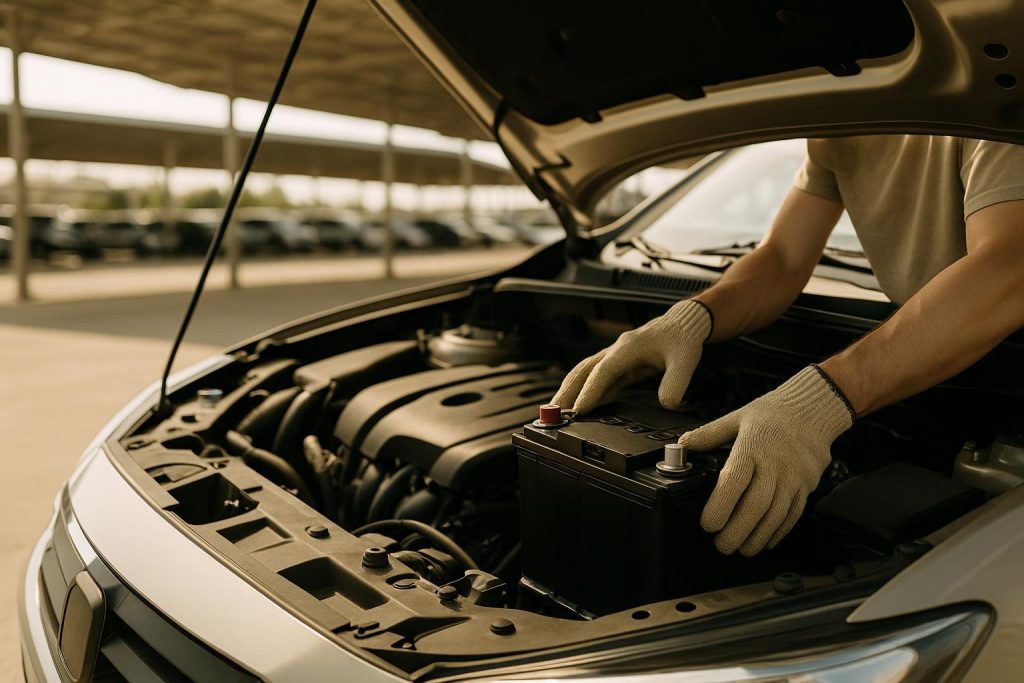
Part of a good storage routine is taking a few extra minutes to check the battery’s condition. Lift the hood and look for any signs of trouble, such as corrosion, which often appears as bluish or white deposits around the terminal connections. If you find buildup, you can use a simple mixture of baking soda and water to neutralize rust. Gently apply it to the corroded areas with a small brush or cloth. Then, rinse with plain water and dry the terminals thoroughly.
In addition to cleaning the terminals, inspect the corners of your battery for any leaks or bulges. Leaks might indicate a crack in the case, while a bulge could be a sign that the battery overheated at some point. If your battery has removable caps, check the fluid (electrolyte) levels, and top them up with distilled water if needed. This helps ensure the internal plates stay surrounded by fluid, preserving the battery’s performance. A quick visual inspection can reveal a lot about the health of your battery. Addressing minor issues now reduces the risk of bigger problems later.
Charging the Battery Before You Store
Once you’ve inspected and cleaned your battery, make sure to charge it fully. Whether you do this by short drives, a battery charger, or a trickle charger, the goal is the same: have it at 100% when you tuck your vehicle away. A fully charged battery has a lower risk of freezing and a higher chance of retaining enough power to start your car after a long storage period. If you have a more sophisticated battery tender, it may cycle the battery through various modes, ensuring it’s charged optimally without overcharging.
Think of fully charging your battery the same way you might top off a gas tank before storage—both are steps that help prevent unwanted damage. If you’d like further insight on whether to fill your gas tank before storing, you can check out Should I keep my gas tank full before placing my car in storage? for additional details.
Disconnect or Remove the Battery
If you plan to keep your car in storage for several weeks or months, one straightforward option to minimize battery drain is to disconnect it. Typically, removing the negative terminal is enough to shut off the circuit and prevent the slow drain from electronics. Storing the battery separately in a place where temperatures stay above freezing can add another layer of security. This is especially helpful in colder regions, where an unheated garage or outdoor lot can dip well below 0°C in the winter.
In some cases, you might choose to remove the entire battery and place it in a more controlled environment, like a basement or insulated garage. If you go this route, be sure to store it upright to prevent spillage of electrolyte, and try to keep it on a surface that insulates it from the cold ground—like a piece of wood or thick mat. This helps maintain a more stable internal temperature, preserving your battery’s overall health.
Using a Battery Maintainer or Trickle Charger
A practical way to ensure your battery remains charged over time is to use a battery maintainer or trickle charger. A maintainer supplies a steady, low-level current that keeps the battery at an optimal state of charge without overcharging. In fact, many modern maintainers have built-in technology that automatically toggles between “charge” and “maintenance” modes, so you don’t have to worry about accidentally frying the battery.
For some vehicle owners, hooking up a trickle charger is essential, especially if their storage setting allows for safe electricity access. If you’re deciding whether a trickle charger is right for you, visit Should I use a trickle charger if my car is in storage for several months? to see if it matches your needs. This approach is often an excellent solution for people who want to reduce the chance of returning to a dead battery, ensuring a smooth start the moment they retrieve their vehicle.
Storing the Battery in the Right Environment
Another key factor in battery care is the environment in which the car is stored. In a region with severe winters, freezing temperatures can sap a battery’s strength, make the engine oil thicker, and amplify any weaknesses in your vehicle’s electrical system. If possible, store your car—and battery—in a dry, temperature-controlled place. That might be a garage that remains relatively warm or a facility that offers some level of shelter. Even though many storage lots are uncovered, a good one will provide easy access and a secure area, so you can check on the vehicle and manage maintenance without hassle.
At Car Storage locations that offer wide, 12×40 ft gravel stalls, you have room to park without having to maneuver tightly around other vehicles. This is particularly helpful when you’re popping the hood to remove or inspect equipment, or hooking up a trickle charger on-site. Choosing a facility near your home can make monthly checks more feasible, too. Remember, the more you can maintain the battery’s environment—keeping it from extreme cold or stifling heat—the better off your battery will be.
Periodic Inspections and Top-Offs
A battery doesn’t need continuous oversight if you’ve taken the above precautions, but a little periodic inspection goes a long way. If you’re storing your vehicle for a season or longer, try to check the battery every three or four weeks. You can measure voltage with a basic multimeter: a healthy battery typically reads around 12.6 to 12.8 volts. If it’s dipped below 12.4 volts, consider charging it up before it drains further.
During these visits, also look for new signs of corrosion. Even if you cleaned the terminals before storage, rust or white powder can reappear. Gently wipe away any new buildup, recheck the fluid levels if applicable, and ensure the battery cables remain snug. If you notice a sudden drop in voltage or repeated signs of leakage, it might be time to invest in a replacement battery rather than risk a no-start situation down the road.
Thinking Ahead: Battery Maintenance for Hybrid or Electric Vehicles
Hybrid and electric vehicles have different battery systems than conventional gas-powered cars, yet they also require consideration before long-term storage. Some manufacturers have specific guidelines for leaving hybrid or EV batteries idle for extended periods. They often recommend storing the vehicle with the battery at a certain state of charge—sometimes not 100%—to reduce stress on the battery cells. If you want more details on this topic, you might check out What should I do if I plan to store a hybrid or electric vehicle? to see recommended steps from experts.
For EV owners, ample planning is important, especially if you won’t have easy access to a charging station. Even a healthy EV battery that’s left to sit in subzero conditions can lose considerable charge over time, so keep an eye on the charge status (if the vehicle or battery management system allows remote monitoring). In some cases, local storage facilities can accommodate quick stops to top off, but that depends on the amenities and your vehicle’s charging requirements.
Addressing Common Questions and Challenges
Battery issues rank high among the top concerns for anyone stepping away from their vehicle for months. For many owners, the worry is not just about the battery but also about potential rodent damage, tire flat-spotting, or moisture buildup inside the cabin. Battery maintenance, however, remains the first line of defense in making sure your vehicle doesn’t turn into a headache come springtime. If you’re seeking more tips on battling moisture, refer to How can I prevent moisture buildup inside my stored car?. Meanwhile, for an extended look at battery survival tips, you can explore What measures can I take to keep my car’s battery from dying in storage? for additional insights.
Beyond the mechanical, you might also be wondering about insurance requirements, early removal fees, or whether you can share a storage space with a friend. Vehicle owners often have a host of questions before finalizing a storage plan. If you’re sorting through those details, it’s a good idea to review publicly available FAQs about local facility rules and regulations. For further insights on usage policies and possible restrictions, you can also explore Are there any restrictions on vehicle modifications in a storage facility? if that applies to your situation.
Practical Steps for a Hassle-Free Storage Experience
- Charge Up: Ensure your battery is at 100% before storage to reduce risk of freezing or complete discharge.
- Disconnect Safely: Remove or disconnect the negative terminal if you won’t drive the car for months. Store the removed battery in a warmer environment if possible.
- Use a Maintainer: Attach a battery maintainer or trickle charger, especially during harsh winter conditions, to keep the charge optimal.
- Check Fluid Levels: If your battery has removable caps, top off the fluid with distilled water to maintain healthy internal chemistry.
- Inspect Terminals: Clean off any corrosion or buildup to keep the electrical connection strong. Re-inspect every few weeks to ensure rust hasn’t returned.
- Choose a Trusted Storage Location: Opt for a facility that offers secure storage, spacious stalls, and convenient access, so you can easily perform periodic checks without feeling cramped.
- Stay Proactive: Make quick visits to measure battery voltage or provide extra charge. Preventive steps now spare you from big hassles later.
Considering Where to Store Your Vehicle
One often-overlooked aspect of battery maintenance is simply how accessible your chosen storage spot is. If you’re hiring a facility with narrow lanes or cramped lots, it can be challenging to pop by for routine upkeep. This is one reason why 12×40 ft gravel stalls are so popular for car storage. The extra room to park lowers your stress about dinging your vehicle or fighting with tight corners. In winter, easy access makes quick battery checks more feasible, allowing you to drive away with peace of mind when the time comes.
When you store in a straightforward, secure space, it’s not just about the battery—though that’s a huge piece. It’s about the entire car: the tires, the paint job, the braking system, and your personal convenience. That’s why looking for a place that provides hassle-free storage can transform your experience, from the day you drop off your car to the moment you drive it out. Consider also the benefit of flat-rate or simple pricing that won’t spring hidden fees on you if you need to take your car out earlier than planned. If you have questions about that scenario, Are there penalties for removing my vehicle earlier than planned? might provide helpful information.
The Bottom Line: Keep It Charged for a Smooth Ride
Long-term car storage is about more than just parking your vehicle and walking away. The battery is one of the most common points of failure when a car sits unused. Taking simple steps—like cleaning the terminals, performing a full charge, disconnecting or removing the battery, and investing in a trickle charger—can save you from a dead battery and an unexpected bill. These actions don’t take a lot of time but have a major impact on preserving your vehicle’s longevity.
Wherever you decide to store your car, remember that a little planning goes a long way toward preserving not only your battery’s charge, but also your peace of mind. By checking in periodically and storing your vehicle in a location where you have room to park and easy accessibility, you’ll be set for the day you’re ready to cruise again. Staying proactive about battery health is a smart, reliable approach, ensuring your car is ready to start strong—no jump-start required.