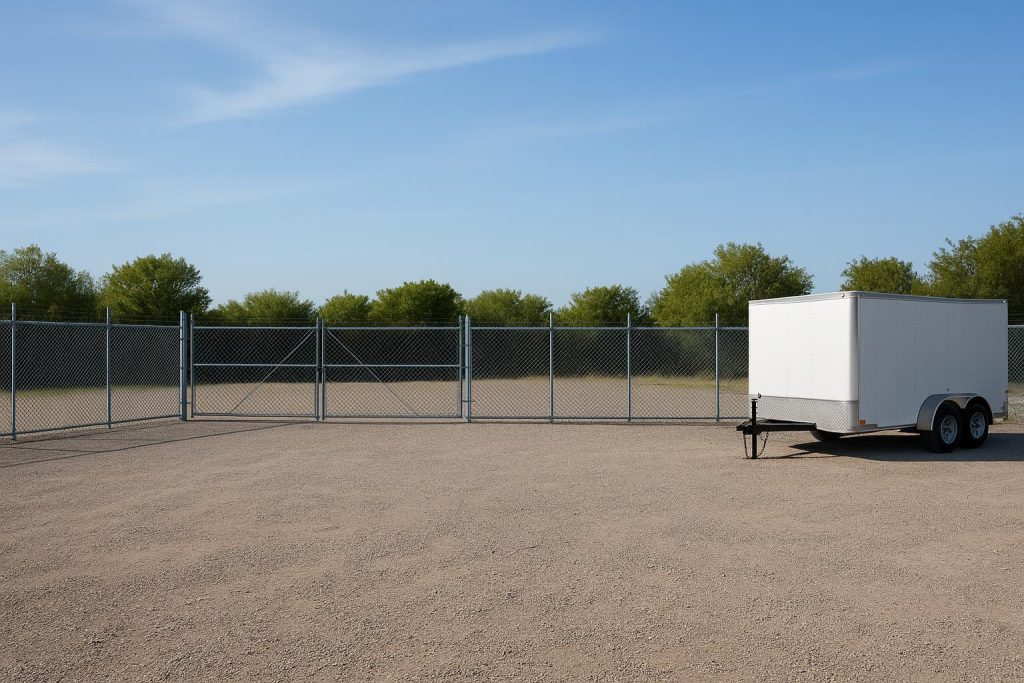
Essential Security Measures for Seasonal Trailer Parking
Whether you own a travel trailer, cargo trailer, or a go-to camper for weekend getaways, finding a secure location to park during the off-season is crucial. Seasonal trailer parking facilities typically offer a range of security measures designed to ensure your trailer remains protected and ready for your next adventure. From sturdy fences and locked gates to bright lighting and video surveillance, each layer of security serves a distinct purpose, deterring unauthorized access and giving owners peace of mind.
In this guide, we’ll explore the most common security measures you can expect to see at a reputable seasonal trailer parking facility. We’ll also look at how these measures work together to positively impact your experience. By the end, you’ll have a clearer understanding of what to look for when choosing the right spot to store your trailer—whether it’s just for a few months or for extended periods. And if you’re wondering about additional considerations, such as special insurance or proper preparation, check out those resources as well. They provide more details about making your storage experience as smooth and worry-free as possible.
1. Sturdy Perimeter Fences as Your First Line of Defense
A reliable fence around the parking area is a straightforward yet highly effective security measure. The point of a sturdy fence or wall is to make it more difficult for unauthorized individuals to even approach your trailer. When a facility invests in a durable fence—often made of chain-link or a similarly robust material—it has two main benefits:
- Deterrence: Opportunistic individuals are far less likely to attempt trespassing if there’s a noticeable barrier.
- Clear Boundaries: A fenced perimeter helps mark out the facility’s property lines, reducing confusion about what areas are accessible to the public.
Because trailers often contain valuable personal items, it’s important that they’re not easily accessed. The best facilities will ensure the fence is well-maintained throughout the year, with no weak spots or gaps. This type of diligence helps you feel confident leaving your trailer in storage, even when harsh weather hits. If you’re curious whether there are any size limitations on storing specific trailer models, be sure to check out this FAQ on size or length restrictions.
2. Gated Access with Personalized Entry Codes
Right after the fence, the next layer of protection at most seasonal trailer parking facilities is a gated entry system. This gate can take several forms—some use a keypad, while others offer card-based entry or RFID tags. In either case, the idea is that only approved individuals who have the correct access code or card can enter the facility. This is especially vital for seasonal trailer parking because:
- Controlled Traffic: Managers can monitor who goes in and out, reducing the chance of unauthorized visitors wandering in.
- Convenience: If you have your own code or card, you can typically access your trailer even after regular office hours, which is huge if you have a spontaneous travel plan or need to grab items unexpectedly.
- Accountability: Some facilities tie individual gate codes to specific accounts, making it easier to track activity if a security incident occurs.
When parking a trailer for a prolonged period, especially in the off-season, having that password-protected gate between your property and potential intruders offers a layer of confidence that’s hard to put a price on. Remember to always keep your access code confidential and report any suspicious activity to facility staff.
3. Bright Lighting for Visibility
Proper lighting won’t just help you find your trailer after dusk; it also plays a huge role in keeping the facility secure. A well-lit area is less appealing to trespassers who might hope to hide in the shadows. Bright lighting makes it easier to see who’s on the property and allows surveillance cameras to capture clearer footage. Some facilities focus their lighting on entrances, exits, and main walking pathways, while others go the extra mile and install lights across the entire parking area. When you’re scouting seasonal storage options, pay attention to how lighting is placed, especially near corners or far-off sections of the lot.
A good rule of thumb is to ask if the lighting is on a timer or motion-activated system. Timers ensure the lights stay on for a set number of hours, while motion sensors illuminate dark areas when movement is detected. Either option can serve as a powerful deterrent against unauthorized entry. Plus, bright lighting offers the practical benefit of letting you hook up or unhook your trailer at various times of day or night without fuss.
4. Video Surveillance and 24/7 Monitoring
Video surveillance has become a standard feature at most reputable trailer storage facilities. Cameras act as extra sets of eyes, recording activity throughout the day and night. Many facilities place cameras in strategic spots—such as near the entrance gate, along the perimeter, and in the center of the lot—to provide a broad coverage area. The constant presence of cameras can deter burglars, who realize they’re more likely to be caught on film, while also offering video evidence if an incident ever occurs.
Some operations integrate their surveillance with a 24/7 monitoring service, where staff or a security company oversees camera feeds in real time. This level of vigilance can be a game-changer, but even cameras that record footage for later review can assist in identifying potential threats. Always consider how well-lit the facility is in relation to camera placements: a camera is far more effective if it’s capturing activity in a brightly lit environment rather than a dim corner of the lot.
5. Trained Staff and Routine Patrols
Having people on-site or making regular patrols can elevate security to another level. While cameras and lights are important, they are passive tools: they only record or illuminate events as they happen. Trained security personnel or facility staff can proactively intervene if something seems out of the ordinary. These individuals might check locks on trailers, verify that no suspicious vehicles are hanging around, or ensure that gates and fences remain in good repair. Some facilities also have staff members who assist with parking, especially if the stalls are specifically designed for large vehicles like RVs and oversized trailers.
A routine patrol can be as simple as scheduled walks or drives around the lot. During each patrol, staff might look for open compartments on trailers, ensure tarps are secured, and note any hazards to address with the trailer owner. If you ever have a question about accessing your trailer during the offseason, you’ll find that staff presence often makes it easier to coordinate visits. In fact, you can learn more about how to schedule a visit by reading this FAQ on offseason trailer access.
6. Individual Locks and Seals
Beyond the facility’s perimeter, it’s wise to secure your trailer individually. Many storage locations recommend (or may require) that owners use their own padlocks or hitch locks. Doing this ensures only you or someone you trust has the key or combination. Some facilities even sell specialized trailer locks, which can include:
- Hitch Locks: Prevent unauthorized vehicles from coupling to your trailer and towing it away.
- Wheel Locks: Immobilize your trailer’s wheels, making it almost impossible to move.
- Bolt or Padlocks for Doors and Compartments: Secure side doors, hatches, or compartments that might contain valuables.
Taking this extra step helps ensure that, even if someone did manage to get onto the property, they still couldn’t easily tow your trailer away. Implementing these personal measures sends a message that your trailer isn’t leaving unless you decide it does. For even more peace of mind, review coverage options through your insurer, and if you’ve wondered whether you need additional coverage, this FAQ on special insurance for trailer storage might help.
7. Organized Layout and Wide Drive Lanes
It may sound more like a convenience factor than a security measure, but a well-organized layout can contribute to safety. When a facility has clearly marked stalls, wide drive lanes, and minimal obstructions, there’s less chance of accidental damage. It also reduces the need for people to maneuver aimlessly around the lot looking for space—something that could raise security concerns if unknown vehicles are circling the property. Clear signage and wide lanes help you park your trailer swiftly and reduce the stress of shifting your rig in tight quarters.
Wide stalls, often around 12 feet by 40 feet, give you room to park comfortably. If you have an oversized unit, you might look for facilities that also provide pull-through stalls. Pull-through stalls remove the complexity of backing up large units, which can be especially helpful after a long day of travel. This open space layout is not only practical; it can deter suspicious behavior by eliminating hidden corners and blind spots where intruders could linger unnoticed. If your trailer’s size is on the bigger side, check out this FAQ regarding length restrictions for more info.
8. Weather-Resistant Storage Practices
Though not always classified strictly as “security” measures, certain weather-related precautions contribute to the overall safety and condition of your trailer. Many seasonal parking facilities recommend anti-theft covers or tarps that serve a dual purpose: hiding valuables from sight and shielding the exterior from the elements. Regularly clearing snow and ice from drive lanes also allows emergency services or staff to respond quickly if needed. It’s a win-win that supports both security and convenience.
If you’re in a place with harsh winters—common in many parts of Alberta—understanding how to protect your rig from cold-weather hazards can be crucial. Whether it’s slipping a protective cover over your roof or winterizing your parking spot with tire pads, these steps keep your trailer in good shape. For additional guidance on winter maintenance, read our tips on keeping your trailer in good shape throughout winter.
9. Security Partnerships and Alarm Systems
Some larger or more advanced facilities invest in alarm systems that activate if a trespasser attempts to climb over the fence or break in through the gate. These alarm systems may be linked directly to local law enforcement or a private security service. Facilities that combine video surveillance, alarm systems, and immediate staff response provide multiple layers of protection. While this level of security might come at a higher cost, it’s a compelling option for owners who want maximum peace of mind, especially if they’re storing expensive or rare vehicles.
In addition, some operations maintain partnerships with local security firms. These partnerships sometimes include random patrols by security personnel, immediate reporting of suspicious activity, or even advanced monitoring for unauthorized trailer movement. When choosing a facility, don’t be shy about asking if they work with any security providers or if they coordinate with local law enforcement in the area.
10. Communicating with Fellow Renters
Though not an official security feature, building a sense of community among those who rent stalls at the same facility can help keep everyone vigilant. In some storage environments, trailer or RV owners look out for each other, reporting anything unusual to staff. If you’re storing your trailer for several months, you might even exchange contact information with a neighbor. A quick message about a moved tarp or an unlocked compartment door can prevent bigger issues in the future.
Create a habit of walking around the lot when you’re there, so you become familiar with which rigs are parked where. That way, you’ll more easily identify something out of place. Community awareness can often match or exceed high-tech solutions because it makes it less likely someone will slip under the radar. In short, having watchful neighbors can be just as effective a deterrent as cameras or alarms.
11. Preparing Your Trailer for Safety and Longevity
Even the best security system does little if your trailer itself is not well-prepared for a stretch in storage. Before you drop off your trailer, take these steps to protect your investment:
- Remove valuable items and store them at home, if possible.
- Ensure your doors and windows are firmly locked.
- Empty your water tanks and properly winterize systems, as needed—learn more in our guidelines on emptying tanks before storage.
- Inspect your tires and consider tire covers to shield them from sun or cold exposure; if you need extra details, check our tire protection FAQ.
- Secure sliding doors, side compartments, and any external features.
Taking these commonsense precautions makes it more difficult for thieves to find anything of value, and it helps you avoid wear and tear caused by weather or critters. Keep in mind that if you store your trailer in a facility that requires scheduling your arrival, it’s best to coordinate any pre-storage maintenance in advance. That way, you won’t feel rushed when you’re finalizing the parking arrangements.
12. The Importance of Secure Yet Accessible Storage
Security measures such as fencing, lighting, and surveillance can sometimes sound intimidating—like you’re storing priceless artwork rather than a trailer. But these measures hinge on striking the right balance of accessibility and safety. Seasonal trailer parking should be convenient, letting you pick up or drop off your unit without hassle, even if you only need a slot for a short period. If an emergency arises and you need to retrieve your trailer unexpectedly, you’ll want a facility designed for ease of access, not an impenetrable fortress.
With that in mind, always confirm the facility’s hours of operation, how to handle gate codes, and the procedure for unplanned visits. You don’t want to be stuck waiting because the office is closed and no one is around to let you through the gate. For instance, if you only need parking for a few months, check out our information on parking a trailer short-term to ensure the caretaker or staff can accommodate your schedule.
13. Confidence in Your Storage Choice
Ultimately, the best seasonal trailer parking facilities combine thoughtful security features with straightforward policies that don’t leave you guessing. Look for places that openly discuss their security protocols, maintain good communication with renters, and handle any unexpected issues promptly. If you have questions about how to manage your trailer over the winter or for the entire offseason, there may be other resources explaining how to keep your trailer in top form. For instance, you could check out tips on winter trailer upkeep if harsh weather is a concern.
Don’t forget the basics: a fenced perimeter, gated entry with personalized codes, bright lighting, routine staff patrols, and individual trailer locks all contribute to a strong baseline of security. Add in a well-kept layout and the right approach to weather-proofing, and you’ve got a formula for hassle-free storage that protects your property. When you see these elements come together, it doesn’t just provide safety—it brings peace of mind. That confidence is valuable, knowing your trailer is locked away securely until you’re ready for your next road trip, camping excursion, or weekend getaway.
In the end, having a reliable storage option means your trailer remains an asset, not a liability—safe from theft, damage, or neglect. Pairing thorough security with the convenience of accessible, wide stalls is a win for any trailer owner. If you’re in the process of choosing a facility, consider asking about their specific features, paying special attention to both security protocols and user-friendly design. When you weigh it all, from lighting and cameras to wide driving lanes, you’ll know you’ve found the best possible place to store your trailer for the season—or any length of time you might need.